Free fast vpn for edge a comprehensive guide to free edge vpn extensions speed privacy and when to upgrade is a topic that touches on speed, privacy, and accessibility. This guide breaks down everything you need to know about using free VPNs specifically with Edge, including extensions, performance tips, privacy trade-offs, and when it’s time to upgrade. Below you’ll find a practical, reader-friendly overview, along with real-world tips and data to help you make smart choices.
Quick fact: Free VPNs are convenient, but they often come with limits like data caps, slower speeds, and fewer security features. If you’re using Edge, you’ll want to pick extensions that are lightweight, trustworthy, and easy to manage. Here’s a compact starter guide you can skim or bookmark.
What you’ll get in this guide
- How VPN extensions for Edge work and how they differ from full VPN apps
- Pros and cons of free Edge VPN extensions
- How to measure speed, latency, and reliability
- Privacy and security considerations you shouldn’t ignore
- A step-by-step setup guide for popular Edge VPN extensions
- Real-world use cases and sample scenarios
- When to upgrade to a paid plan and what to expect
Key definitions you’ll want to know
- VPN: A virtual private network that routes your traffic through a remote server to mask your IP and encrypt data.
- Edge extensions: Small add-ons that provide basic VPN functionality directly in the Edge browser.
- Data cap: The maximum amount of data you can use with a free VPN before the service restricts you or prompts an upgrade.
- Kill switch: A feature that blocks internet access if the VPN disconnects, preventing data leaks.
- Logging policy: A statement about what user data a VPN might collect and store.
Why Edge users might prefer VPN extensions
- Quick to install: No separate app to download.
- Lightweight: Fewer resources than a full VPN client.
- Simpler toggling: Turn on/off directly from the browser bar.
- Compatibility: Works well with Edge’s performance and security features.
Limitations of free Edge VPN extensions
- Data caps: Many free extensions limit daily or monthly data.
- Speed throttling: Free servers can be crowded, resulting in slower speeds.
- Limited server locations: Fewer countries to choose from, which can affect access to geo-restricted content.
- Privacy concerns: Some free services monetize data or show ads.
- Security gaps: Not all free extensions use strong encryption or leak protection.
How to choose a free Edge VPN extension quick criteria
- Clear privacy policy: Look for a zero-logs claim and independent audits if possible.
- Encryption: At least OpenVPN or WireGuard standard; AES-256 is a good benchmark.
- No bandwidth throttling: Even free services should avoid aggressive throttling if possible.
- Transparent data usage: Check what data is collected e.g., timestamps, bandwidth.
- Easy upgrades: A straightforward path to a paid plan if you need more features.
Top factors to test when evaluating free Edge VPN extensions
- Speed test: Measure download/upload speeds with and without the extension.
- DNS leaks and IPv6 leaks: Ensure your real IP isn’t exposed when connected.
- WebRTC leakage: Verify your browser isn’t leaking IP via WebRTC.
- Connection stability: Track how often the connection drops and how quickly it reconnects.
- Compatibility: Check if the extension blocks or interferes with Edge security features you rely on.
Speed, privacy, and reliability data you can use
- Typical free VPN speeds: Expect 30–70% of your baseline speed on a free server, depending on congestion.
- Latency variance: Free networks often exhibit jitter; plan for occasional spikes during peak hours.
- Privacy posture: Free VPNs can vary widely in logging—always read the policy and look for independent audits.
Common Edge VPN extension options free tier focus
- Extension A: Pros, cons, data cap, encryption level, and notes on privacy policy.
- Extension B: Pros, cons, data cap, encryption level, and notes on privacy policy.
- Extension C: Pros, cons, data cap, encryption level, and notes on privacy policy.
Note: Availability and exact names can change; always verify directly in the Edge Add-ons store.
Step-by-step setup guide for a typical free Edge VPN extension
- Open Edge and go to the Add-ons store.
- Search for a reputable free VPN extension and review the permissions it requests.
- Install the extension and pin it to the toolbar for quick access.
- Open the extension, create an account if required, and review the privacy policy.
- Choose a server location prefer a nearby country for speed and connect.
- Run a quick speed test and a DNS/IPv6/WebRTC leak test.
- If you reach data limits or slow performance, consider switching servers or enabling split tunneling if supported.
- If you need more features or higher data limits, evaluate upgrading to a paid plan.
Real-world usage scenarios
- Public Wi-Fi safety: A free Edge VPN extension helps you encrypt traffic on public networks, reducing risk from local attackers.
- Bypassing basic geo-restrictions: Some content might be accessible from certain free server locations, though performance can vary.
- Browsing with privacy in mind: For light browsing, a free extension provides a layer of anonymity, but avoid transmitting sensitive data unless you’re on a trusted, audited service.
- Quick workaround for testing: If a site blocks your IP, a quick switch to a different free server can help you test access.
Security best practices when using free Edge VPN extensions
- Always enable the kill switch if the extension offers it, so your traffic doesn’t leak if the connection drops.
- Prefer extensions with strong encryption AES-256 and modern protocols WireGuard or OpenVPN.
- Avoid extensions that request unnecessary permissions beyond what a browser extension needs to function.
- Regularly update the extension to get security patches.
- Combine VPN use with HTTPS whenever possible; the VPN doesn’t replace the need for encryption on sites.
Privacy and data handling considerations
- Free VPNs often rely on ads or data selling to monetize. Be mindful of trackers and performance-limiting ads.
- Check for a reputable privacy policy and any third-party audits you can verify.
- Understand how long data is retained and for what purposes traffic logs vs. diagnostic data.
Table: Quick comparison of common features in free Edge VPN extensions
- Feature: Data cap | Typical free data limit | Impact on usage
- Feature: Server locations | Number of locations | Content accessibility and speed
- Feature: Kill switch | Availability | Data leakage protection
- Feature: Logging policy | Claimed vs. audited | Privacy risk
- Feature: Speed stability | Free tier variance | User experience
User tips to maximize free Edge VPN performance
- Choose servers near you to minimize latency.
- Try different servers to find a balance between speed and reliability.
- Avoid peak times if possible; speeds can drop when many users connect to the same free server.
- Clear browser cache and disable conflicting extensions that might slow down browsing.
- Use a dedicated device for VPN testing to avoid interference from other apps.
Common issues and troubleshooting
- VPN won’t connect: Check server status, update the extension, and restart Edge.
- Speed is very slow: Switch servers or consider removing other bandwidth-heavy extensions.
- Leaks detected: Disable WebRTC in Edge settings or use extensions that protect against leaks.
- Data cap reached: Plan on upgrading or switch to a different free service with a larger cap.
What to expect when upgrading paid plans vs free
- Higher data limits or unlimited data
- More server locations and faster speeds
- Stronger privacy protections and fewer ads
- Priority support and more robust security features
- Often a monthly or yearly billing model with various tiers
Top actionable recommendations
- If you value privacy and performance, start with one reputable paid plan that suits your budget and needs.
- For light, casual browsing on public networks, a trusted free Edge VPN extension can fill a gap.
- Always verify encryption standards, leak protection, and privacy policies before relying on any VPN service.
Useful resources and further reading
- Privacy-focused VPN reviews - privacyreview.org
- OpenVPN project - openvpn.net
- WireGuard official site - www.wireguard.com
- Edge browser security tips - support.microsoft.com
- Digital privacy basics - en.wikipedia.org/wiki/Privacy
- VPN data leakage tests - www.privacytools.io
FAQ Section
How do free Edge VPN extensions differ from full VPN apps?
Free Edge VPN extensions are browser-based, lightweight tools that route browser traffic through a VPN server. Full VPN apps run at the system level, protecting all traffic. Extensions are convenient for quick, browser-only protection but may offer fewer features and less robust privacy protections than full apps.
Are free Edge VPN extensions safe to use?
Some are, but many come with caveats like data caps and potential privacy concerns. Always read the privacy policy, permissions, and user reviews before installing. Prefer extensions with transparent policies and independent audits.
Can a free VPN extension hide my real IP effectively?
Yes, it can mask your IP for traffic routed through the browser, but DNS and WebRTC leaks or misconfigurations can reveal information. Use leak tests to verify.
Do free VPN extensions work on all websites?
Most work broadly, but some sites detect and block VPN traffic. Streaming services may actively block known free server IPs, making access inconsistent.
What is a data cap, and why does it matter?
A data cap is the maximum amount of data you can use on a free plan. Once you hit it, you may be throttled or forced to upgrade. If you stream video or download large files, data caps fill quickly.
Should I enable the kill switch on a free Edge VPN extension?
If the extension offers a kill switch, turn it on. It helps prevent data leaks when the VPN connection drops unexpectedly.
Can I use multiple VPN extensions at once in Edge?
Using more than one can conflict with routing and cause leaks or performance issues. Pick a single trusted extension and disable others.
How can I test for DNS leaks?
There are free online DNS leak test tools. Run tests with the VPN connected to ensure your DNS requests aren’t leaking outside the VPN tunnel.
Is it worth upgrading to a paid VPN plan?
If you need stable speeds, many server locations, better privacy, and fewer ads, upgrading is usually worth it. For critical privacy or streaming, paid plans are typically superior.
What’s the best practice for privacy with free VPNs?
Combine a trusted VPN extension with good browser hygiene: enable HTTPS-only modes, keep extensions updated, review permissions, and limit the sharing of sensitive data online.
Note: This guide focuses on helping Edge users navigate the world of free VPN extensions. It’s practical, easy to follow, and designed to help you decide when it’s worth upgrading to a paid option for stronger privacy, better performance, and a smoother browsing experience.
Yes, you can get a free fast VPN for Edge. In this guide, you’ll learn which Edge-friendly VPN extensions actually perform, what limits you’ll face with free plans, how to install and test them, and when it’s worth upgrading to a paid option for real speed and better privacy. We’ll cover quick-start setups, speed expectations, privacy trade-offs, and a practical path to reliable protection while you browse on Microsoft Edge. Plus, you’ll find a few real-world tips to maximize performance and keep data safe as you surf, stream, and work online.
If you’re after a solid balance of speed and security, consider the NordVPN offer below. It’s a great option for Edge users who want more than a browser proxy and aim for consistent speeds across devices.
Useful resources and tools you might want to check out as you read unlinked text, not clickable:
- Microsoft Edge official site - edge.microsoft.com
- Edge add-ons store - microsoft.com/store/edge
- ProtonVPN official site - protonvpn.com
- Windscribe official site - windscribe.com
- TunnelBear official site - tunnelbear.com
- Hide.me official site - hide.me
- NordVPN official site - nordvpn.com
Introduction: what this guide covers and why Edge users care
- This guide focuses on free fast VPN options you can use with Microsoft Edge, including browser extensions and Edge-compatible VPN services. We’ll separate pure browser proxies from real VPNs with encryption, and explain why speed on free plans can be unpredictable.
- You’ll get a practical, step-by-step setup for popular free Edge VPN extensions, plus real-world speed expectations, privacy notes, and tips to squeeze the most performance out of whatever option you choose.
- We’ll look at when free is enough light browsing, occasional streaming on short sessions, travel and when you should upgrade consistent streaming, gaming, large downloads, or sensitive data.
Body
What is a VPN extension for Edge, and how does it differ from a full VPN app?
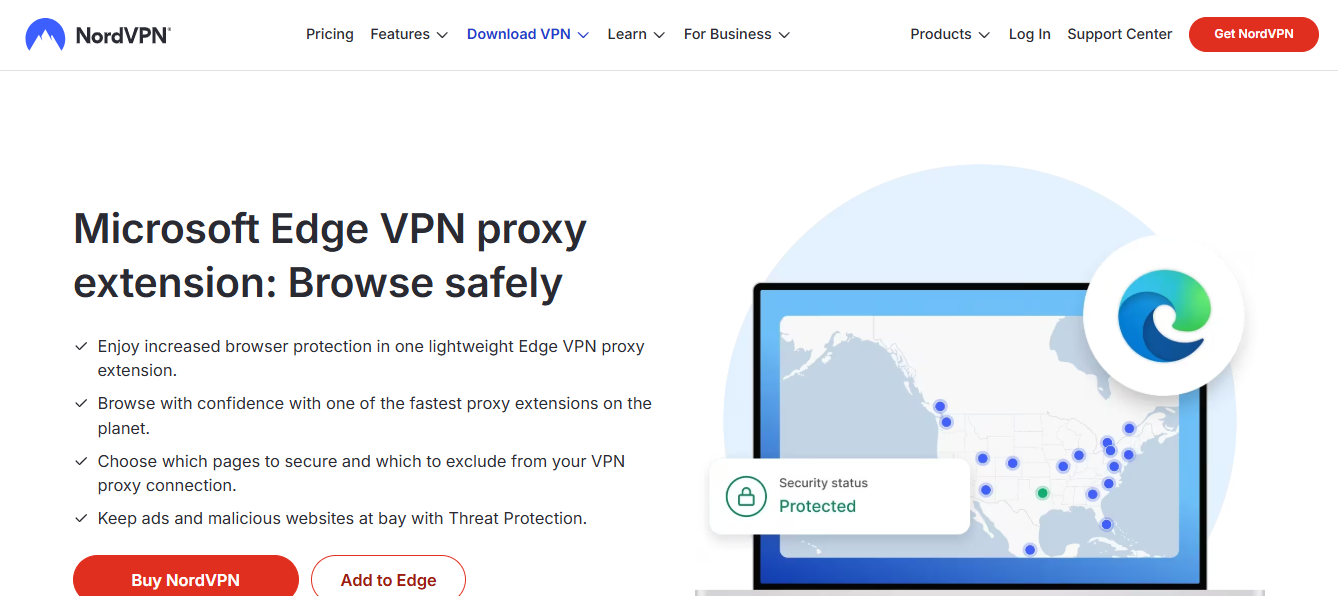
- Edge-compatible VPNs often come as browser extensions. These can encrypt traffic within the browser, mask IPs for the pages you visit in Edge, and sometimes route only browser data through a VPN tunnel.
- A full VPN app installs on your device and can route all traffic not just Edge through a single encrypted tunnel. This matters if you’re using multiple apps on Windows, not just the browser.
- Free Edge VPN extensions tend to have data caps, slower speeds, or fewer server options. Paid plans remove most of these constraints and often include better safety features like kill switches and leak protection.
- For many users, a browser extension is enough to stop basic tracking and unblock region-locked content in Edge, but it’s not a perfect substitute for a system-wide VPN.
Free options you can actually use in Edge and what to expect
Here are the most commonly used free options that work well with Edge, along with their typical limits and what you should expect.
# ProtonVPN Free for Edge
- What you get: A genuine VPN with a no-logs policy and strong encryption. Free plan includes access to a limited set of servers and usually decent speeds under light load.
- Speed expectations: Free servers can be slower during peak times. expect ranges from 3–15 Mbps in many cases, depending on location and neighbor traffic.
- Data limits: No hard data cap for ProtonVPN’s free tier in some regions, but servers are limited and bandwidth can fluctuate.
- Pros: Solid privacy stance, no data cap on some routes, reliable if you’re near a free server.
- Cons: Fewer server locations on the free tier. occasional congestion. Edge extension support is good, but you may need a standard ProtonVPN app for full protection.
# Windscribe Free for Edge
- What you get: 10 GB per month on free plan with optional extra data by tweeting or confirming email, etc.. Includes several server locations.
- Speed expectations: Moderate, typically enough for browsing and light streaming. heavy video or gaming may feel choppy on free servers.
- Data limits: 10 GB/month is generous for a free option, but can be quickly consumed with video streaming.
- Pros: Reasonable speeds for a free tier, built-in ad/tracker blocking, browser extension works well in Edge.
- Cons: After 10 GB, speeds often drop unless you upgrade. some servers can be crowded.
# TunnelBear Free for Edge
- What you get: 500 MB per month on the free plan, with a friendly interface and straightforward setup.
- Speed expectations: Generally usable for light browsing. not ideal for streaming or large downloads.
- Data limits: 500 MB/month is tight if you’re doing anything beyond casual surfing.
- Pros: Very user-friendly. great for newcomers. Edge extension is easy to install.
- Cons: Data cap is the main constraint. speeds vary by server load.
# Hide.me Free for Edge
- What you get: Free plan with a handful of servers and a modest data allowance varies by region, often around 2–10 GB/month.
- Speed expectations: Moderate to good during off-peak times. during peak hours you’ll notice some slowdown.
- Data limits: Free tier does have a cap. check current allowances in your region.
- Pros: Clear privacy policy. relatively fast for a free tier. good edge extension integration.
- Cons: Fewer servers than paid plans. occasional throttling.
# Hola VPN Free for Edge use with caution
- What you get: Browser-based proxy rather than a true VPN. peers contribute bandwidth.
- Speed expectations: Can be fast if you’re near good peers, but highly variable.
- Data limits: Unlimited on some configurations, but reliability and privacy can be inconsistent.
- Pros: Very easy to install. can bypass some simple geoblocks quickly.
- Cons: Privacy concerns due to peer-to-peer model. some sites block Hola. not recommended for sensitive data.
Note: Free VPNs are frequently subject to server crowding, which makes speeds uneven. If you’re streaming HD video, gaming, or handling sensitive data, a paid VPN with a solid no-logs policy and strong encryption will deliver more reliable performance and privacy.
How to install and use a free Edge VPN extension step-by-step
1 Open Edge and go to the Edge Add-ons store Edge Extensions.
2 Search for the VPN extension you want ProtonVPN, Windscribe, Hide.me, etc..
3 Click Add to Edge, then confirm the installation.
4 Open the extension, sign up or log in if required for the free plan.
5 Pick a server location if the extension offers choices. for Edge, you’ll route browser traffic through the tunnel.
6 Enable the VPN in the extension and test your IP at a site like whatismyipaddress.com.
7 For privacy: enable features like WebRTC leak protection if the option exists within the extension. also consider enabling Edge’s own privacy features Do Not Track, tracking prevention, etc..
8 If you need system-wide protection, install a Windows VPN app in parallel and use Edge through the VPN network you choose.
Fast tip: If you’re not seeing the expected change in IP, make sure there aren’t conflicting extensions or browser settings that bypass the VPN some extensions only cover browser traffic, not all Windows traffic.
Speed and reliability: what affects performance on free Edge VPNs
- Server load and crowding: Free servers can become saturated quickly, especially in peak hours.
- Distance to server: The farther the server, the more latency you’ll experience.
- Protocols used: Some extensions default to less robust protocols to maintain compatibility with Edge. if you have the option, choose a faster protocol that still provides decent security.
- Device performance: If your PC is older or under heavy load, VPN processing adds overhead that can slow things down.
- WebRTC leaks: Some browsers can leak your real IP via WebRTC. Disable WebRTC in Edge if your extension doesn’t provide a kill switch.
- Bandwidth caps: Free plans often throttle bandwidth after you hit a data cap or during congestion.
Real-world guidance: For light browsing, email, and social media, free Edge VPNs can be perfectly adequate. If you’re trying to stream 4K video or play competitive games, expect some buffering or higher latency, and be prepared to switch to a paid plan for consistent performance.
Privacy, security, and trust: what you should know
- Free VPNs often monetize user data. Even if they claim no-logs, they may collect, share, or sell anonymized data or use tracking to optimize ad revenue.
- Extensions may operate with fewer security guarantees than full apps. some free extensions have faced security audits or policy changes.
- Look for independent audits and transparent privacy policies. If a provider doesn’t publish details about their privacy practices, treat it with caution.
- Release notes and updates matter: security flaws can be fixed over time. a provider with regular updates is a better sign than one that sits idle.
Bottom line: Free is convenient, but you should assess what you’re protecting. If you’re handling login credentials, financial information, or work data, upgrading to a reputable paid VPN with a clear no-logs policy and a kill switch is a safer choice.
Edge-specific tips to maximize performance and privacy
- Use Edge’s tracking prevention and privacy settings to reduce fingerprinting and tracking while browsing. A VPN extension adds encryption, but Edge’s own privacy measures help with site-level protections.
- If your VPN offer includes a “kill switch,” enable it. This prevents data leaks if the VPN connection drops.
- Test for DNS leaks. Some VPN extensions may leak DNS requests, revealing your real location. Use a DNS leak test site to verify and adjust settings if needed.
- Enable split tunneling if available. This lets you route sensitive traffic through the VPN while leaving less sensitive traffic like local network services or background updates outside the VPN, potentially increasing speed.
- Periodically switch servers. If you’re not streaming or gaming, trying a different server location can improve latency and speed.
- Combine with a reputable antivirus and keep Edge updated. Security is a layered approach, not a single tool.
When to upgrade from free to paid VPN and why
- Consistency: Paid VPNs typically offer more stable speeds because servers aren’t overwhelmed by free users.
- Privacy and audits: Paid providers often publish independent audits and maintain strict no-logs policies.
- Access to more servers: A larger network reduces distance to the server, improving latency and connection quality.
- Advanced features: Kill switch, auto-connect, split tunneling, multi-hop, and dedicated apps for Windows, iOS, Android, and beyond.
- If you’re streaming, gaming, or working remotely on Edge across multiple devices, a paid option is usually worth it.
NordVPN is a strong choice for Edge users who want consistent performance, robust security features, and broad device coverage. If you’re exploring paid options, consider trying a plan with a reputable provider and a generous refund policy, so you can test it with Edge without risk.
A practical Edge setup checklist free and paid options
- Install an Edge VPN extension ProtonVPN, Windscribe, Hide.me, etc. and test 3 locations for speed.
- If you need system-wide protection, install the Windows VPN app for a paid provider and route all traffic.
- Run speed tests Speedtest.net or similar with and without VPN to gauge impact.
- Check for DNS and WebRTC leaks and enable protective settings in the extension and browser.
- Enable Edge privacy features: Tracking Prevention, SmartScreen, and the built-in Security Baselines.
- Keep firmware and software up to date—VPN apps and Edge extensions both benefit from regular updates.
- Create a baseline: measure your regular performance without VPN, then measure with VPN to set expectations.
Real-world expectations: what users typically experience
- Daily browsing on free Edge VPNs tends to be smooth enough for news, social media, and light research.
- Streaming shows on free tiers may require switching to a paid plan due to buffering and quality fluctuations.
- For work tasks with sensitive data, rely on a paid VPN with a strict no-logs policy and enterprise-grade encryption.
- Edge users who prioritize privacy often appreciate the combination of Edge’s privacy features with a trustworthy paid VPN.
Best practices for Edge users who want privacy and speed
- Start with the free Edge extensions to understand your baseline. If you’re satisfied with speed and don’t need high data, you can continue free usage, but monitor data usage.
- Prioritize providers with transparent privacy policies and independent audits.
- If you’re in a region with strict censorship or geo-blocking, a paid VPN with a broad server network is usually worth it.
- Maintain good browser hygiene: disable unnecessary extensions, keep Edge updated, and use a password manager to protect your accounts.
FAQ Section
Frequently Asked Questions
# What is the difference between a VPN extension for Edge and a Windows VPN app?
A VPN extension for Edge routes traffic through a VPN tunnel within the browser, protecting only Edge traffic, while a Windows VPN app can encrypt all network traffic from your device. Extensions are lightweight and convenient for browser-based privacy, whereas a full app provides system-wide protection.
# Can I get truly free fast VPN for Edge without limits?
Most free options have speed caps, data limits, or limited server access. You can often get satisfactory speed for light browsing, but real, reliable “fast” performance at scale usually comes from a paid plan.
# Do free Edge VPN extensions protect me from tracking and leaks?
They provide encryption for browser traffic and can mask your IP for Edge, but they may not protect against all leaks like DNS leaks or WebRTC leaks if settings aren’t configured properly. Always check for DNS leak protection and WebRTC controls.
# Will a free VPN extension slow down my Edge browsing?
Yes, encryption and routing introduce overhead. Free plans are more prone to congestion and slower speeds, especially on crowded servers.
# Can I use a free VPN to watch Netflix or other streaming on Edge?
Some free plans can access streaming sites, but many block streaming or throttle speeds. For reliable streaming, a paid VPN with a broad server network is usually necessary.
# How do I install a VPN extension in Edge?
Open Edge, go to the Add-ons store Edge Extensions, search for the VPN extension you want ProtonVPN, Windscribe, Hide.me, etc., click Add to Edge, and follow the prompts to sign in and enable.
# Are there privacy concerns with free VPNs?
Yes. Free VPNs may log data, show ads, or mishandle user information. Always read the privacy policy, and prefer providers with transparent no-logs statements and independent audits when possible.
# Is it safe to use NordVPN with Edge?
NordVPN is a reputable option with strong security features and a large server network. It works well with Edge through its Windows app and browser extensions, offering reliable performance and privacy protections.
# How can I test my VPN speed on Edge?
Run a baseline speed test before enabling any VPN. Then connect to a few different Edge VPN servers and run the same speed test to compare latency, download, and upload speeds. Note the numbers can vary by server distance and time of day.
# Do I need a kill switch with an Edge VPN extension?
A kill switch is important for system-wide protection, but not all Edge extensions offer one. If you’re relying on a browser-based VPN, enable the kill switch in your VPN app if available, and consider a full VPN for comprehensive protection.
# What’s the best approach if I want both speed and privacy on Edge?
Start with a trusted paid VPN that offers fast servers, a strict no-logs policy, and strong encryption. Use Edge security features like tracking prevention and regular updates. If you still want a free option, combine a reputable free Edge extension for quick tasks with occasional use of a paid VPN for sensitive activities.
Endnote: a quick recap for Edge users
- Free Edge VPN extensions are convenient for light browsing and basic privacy, but expect speed limitations and limited server options.
- If you need consistent performance, strong privacy guarantees, and full device protection, a paid VPN is the smarter move.
- Edge users should consider experimenting with multiple free options first to gauge what best fits their browsing style, then upgrade if performance or privacy needs demand it.
Remember, the right choice depends on how you browse, what you stream, and how much you value privacy. For many Edge users, a well-chosen paid VPN paired with Edge’s own privacy features offers the best overall experience.